
Ending dereliction and vacancy
14th September 2026
Delivering Ireland’s housing plan
14th September 2026Cover: Building for the future
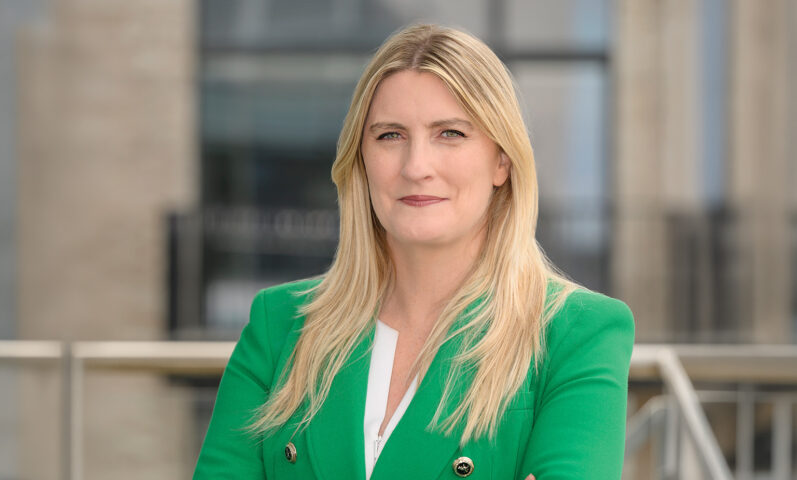
Clúid CEO Averil Power talks to Housing Ireland Magazine to explore why Ireland’s housing challenge is about more than construction, why public trust and long-term stewardship matter, and how stronger partnerships between public and non-profit providers can help deliver thriving communities for generations.
Ireland’s housing debate often focuses on one question: how many homes can we build, and how quickly?
For Averil Power, Chief Executive of Clúid, that is only part of the story.
“Ireland’s housing challenge is much bigger than a construction challenge,” she says. “Yes, we need to build far more homes. But we also need organisations capable of managing those homes, supporting residents, and sustaining communities for decades to come.”
Power believes the success of housing policy should not be measured solely by annual delivery targets.
“The real test of housing policy is not what we build this year. It is what those neighbourhoods look like 20 years from now.”
It is a perspective shaped by both personal experience and professional expertise.
Having grown up in a council estate in Shankill, south Dublin, Power experienced first hand the stability, opportunity, and sense of belonging that a good home and strong community can provide.
“I know the lifeline that social housing provides to families who cannot afford high quality housing otherwise. That had a massive impact on my upbringing, on the opportunities I had as a young person, and on the doors that opened for me as a result.”
“The real test of housing policy is not what we build this year. It is what those neighbourhoods look like 20 years from now.”
The experience continues to shape her approach to housing today.
“A secure home is the anchor for everything else: education, employment, health, and participation in community life.”
Power says she is acutely conscious that many families do not currently enjoy that same stability.
“I am very grateful for the opportunities that I and my family had, but I am conscious of the number of families now who do not have that.”
It was this combination of lived experience and a determination to expand opportunity that attracted her to Clúid, one of Ireland’s largest approved housing bodies (AHBs), which today provides more than 14,000 homes to over 36,000 residents across the country.
Bringing different perspectives together
Power’s understanding of housing has also been shaped by a career spanning politics, government, and the charitable sector.
Before joining Clúid in November 2025, she served as a ministerial adviser across multiple government departments, was elected to Seanad Éireann, and later led both the Asthma Society of Ireland and the Irish Cancer Society.
“I have seen the difficult decisions that ministers and officials have to make, the competing demands on public resources, and the challenges involved in translating policy into action.”
That experience, she believes, gives her a unique perspective.
“My role is to bring lived experience, political insight, and organisational leadership together to help Clúid and the wider sector do more.”
The opportunity is significant. Over the past decade, Clúid has grown from approximately 5,500 homes to more than 14,000 homes, supported by record levels of government investment and strong partnerships across the sector.
“It is really exciting to come into an organisation with such a strong track record and strong capabilities and to work with our team and partners to help Clúid make an even bigger contribution.”
Stewarding public trust
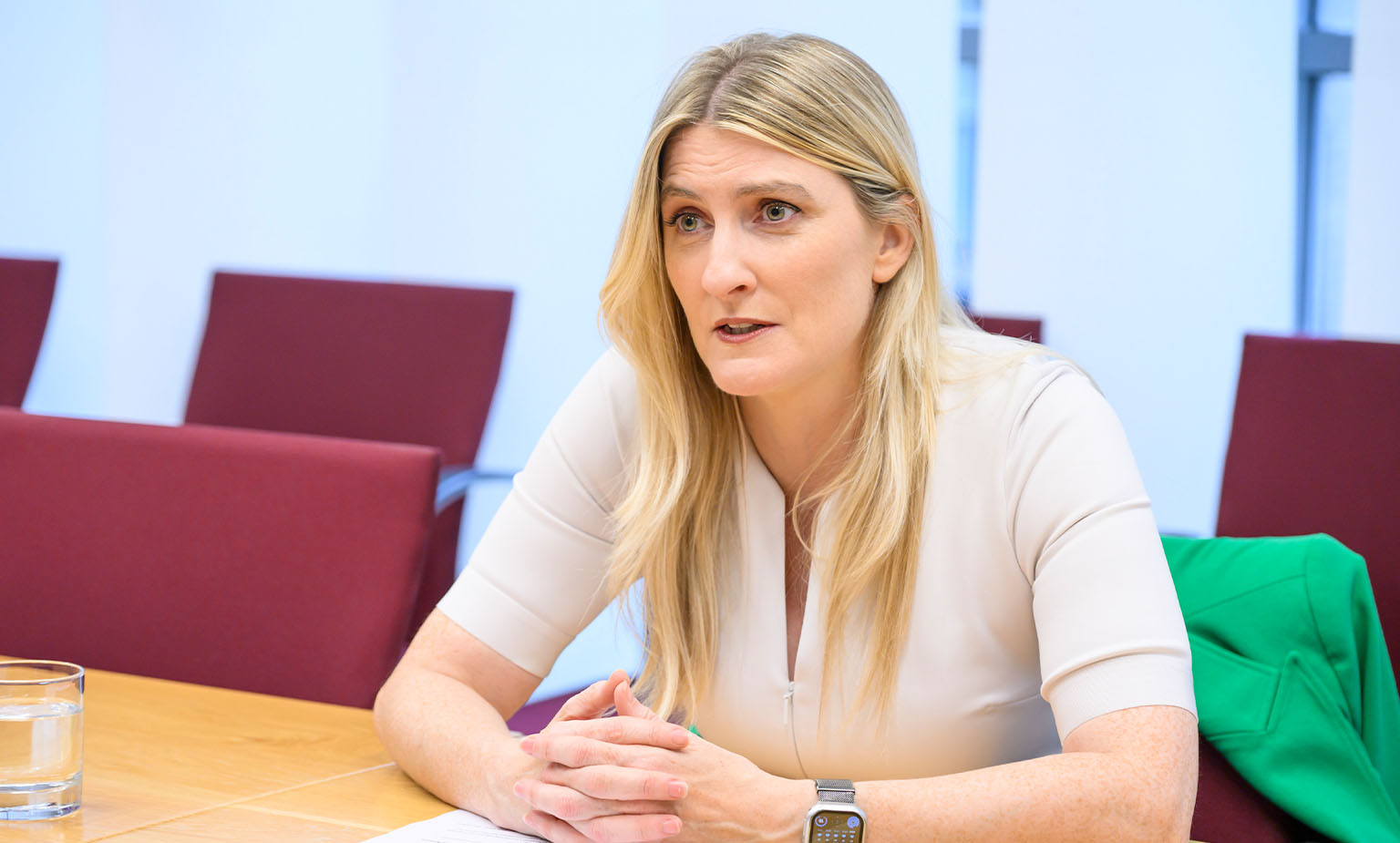
Power’s experience in government has also shaped her understanding of accountability.
Having worked at the heart of public policy and spending decisions, she is acutely conscious of the responsibility that comes with managing significant public investment.
“I am very conscious, as CEO of Clúid, of the public trust being placed in us and of the level of public resources we are entrusted with. It is very important to me personally that we are accountable for that, that we do what we say we will, and that we deliver value for money.”
For Power, accountability extends far beyond financial performance. It means maintaining homes to a high standard, supporting residents, investing in communities, and ensuring every euro delivers the greatest possible long-term benefit.
“I want to make sure we are worthy of that trust, that we deliver what we promise, and that we deliver excellence in everything we do.”
She notes that AHBs have significant responsibilities to residents, lenders and the State, and operate within a framework of regulatory oversight.
In addition to regulation by the Residential Tenancies Board, AHBs are subject to oversight by the Approved Housing Bodies Regulatory Authority (AHBRA), which monitors areas including governance, financial viability, and service standards.
This oversight is an important part of maintaining confidence that public investment is being managed responsibly and delivering long-term value for residents and communities.
More than bricks and mortar
While Ireland’s immediate challenge is increasing supply, Power warns against viewing housing purely through the lens of construction.
“The homes we build today will still be here in 50 or 100 years’ time. They are where people will raise families, grow old, build friendships, and create communities.”
Because of that, she argues, the housing sector needs to pay just as much attention to long-term stewardship as it does to housing delivery.
“The question is not simply who can build homes. It is who will maintain them, manage them, support residents, and help those neighbourhoods thrive for generations to come.”
As Ireland increasingly delivers social and cost rental housing at scale, that challenge becomes even more important.
“Large-scale rental housing requires more than bricks and mortar. It requires professional asset management, planned maintenance, resident engagement, tenancy sustainment, and community development.”
Without that long-term focus, Power warns, there is a risk of creating future social challenges while attempting to solve today’s housing shortage.
A housing organisation built for the long term
Power believes Ireland needs organisations capable not only of building homes, but of managing them, maintaining them, and supporting residents and communities for decades to come.
She points to Clúid’s own growth as evidence of the capability that has developed within the AHB sector.
Over the last decade, Clúid has grown from approximately 5,500 homes to more than 14,500 homes and now supports over 37,000 residents nationwide. Behind that growth is a multidisciplinary team of around 400 professionals working across housing development, architecture and design, planning, project management, surveying, maintenance, service delivery, resident engagement, tenancy sustainment, finance, governance, risk management, and sustainability.
“We have developed the expertise and systems required not only to deliver housing at scale, but also to manage those homes successfully over the long term.”
That expertise has enabled Clúid to become one of the State’s most significant housing delivery partners. The organisation has delivered award-winning developments, pioneered innovation including Ireland’s first cost rental homes and undertaken one of the country’s largest retrofit programmes.
Power also points to the organisation’s strong focus on residents.
“We never want to lose sight of the fact that housing is ultimately about people.”
According to Clúid’s resident satisfaction survey, 89 per cent of residents describe the organisation as easy to deal with, while its dedicated in-house maintenance service, Clúid Works, enables it to maintain homes and respond directly to resident needs.
“Our growth has only been possible because of the confidence placed in us by residents, local authorities, government, lenders, and sector partners. That trust has been earned through delivery, partnership, professionalism, and sound governance.”
The role of approved housing bodies
Power is passionate about the role AHBs can play within Ireland’s housing system.
She believes AHBs like Clúid occupy a unique space, combining professional expertise and financial discipline with a social mission.
“We have to be financially sustainable, professionally governed, and operationally effective. But every decision we make is ultimately driven by the needs of residents rather than shareholders.”
She describes this as a combination of “commercial discipline and social purpose”.
For Power, one of the greatest strengths of the AHB model is that it converts public investment into long-term public value.
“When government invests in an AHB home, it is not a once-off subsidy. It is not simply a short-term intervention. It is creating a home that will remain in social or affordable use for generations.”
Unlike temporary measures, she argues, investment in AHB housing creates permanent additional housing assets while ensuring long-term stewardship of homes, residents, and communities.
“We provide homes for life. But our responsibilities do not end when the keys are handed over.”
Great places to live
Power frequently returns to a phrase that has become central to Clúid’s vision: creating “great places to live”.
For her, that means not just providing accommodation, but also security, comfort, and connection.
“Security means having a home for life. Comfort means a warm, energy-efficient home that is affordable to live in. Connection is about feeling part of a vibrant community.”
Clúid has invested heavily in retrofitting and sustainability, with the majority of its homes now A- or B-rated.
But Power emphasises that thriving communities matter just as much as high-quality homes.
That commitment is reflected in stories she has heard from residents.
She recalls meeting an older resident in Cork who moved from an isolated rural house into a home managed by Clann, Clúid’s age-friendly housing and services provider.
Previously, the resident lived alone in a cold and difficult-to-maintain property. Following her move, she gained access to a modern, energy-efficient home, communal facilities, regular activities, and a network of neighbours.
“She had gone from feeling isolated to being part of a community.”
For Power, these are the moments that bring housing policy to life.
“When you get out and hear directly from residents about the difference housing has made to them, that really matters.”
Those interactions also provide perspective during the more challenging aspects of leading a large organisation.
“When the days are difficult, when you are dealing with complex decisions and long hours, those conversations remind you why you are doing it.”
Partnership, not competition
While eager to see the AHB sector grow, Power is equally clear that housing delivery should not become a competition between providers.
She is keen to acknowledge the central role local authorities have played, and continue to play, in creating successful social housing communities.
“I know personally the difference local authority housing can make. I grew up in a local authority estate that provided stability, opportunity, and a strong sense of community.”
She welcomes the growing role of local authorities, the Land Development Agency (LDA), and the Housing Activation Office.
However, she believes the scale of Ireland’s housing challenge means no single organisation can solve it alone.
“The strongest housing systems internationally harness the strengths of public bodies and independent not-for-profit housing providers working together.”
For Power, the future lies in partnership.
“Local authorities bring local knowledge, democratic accountability, and leadership. The LDA helps unlock strategic land. AHBs bring specialist housing expertise, social purpose, and long-term stewardship. We need all of those strengths working together.”
“The real opportunity is to create a housing system where local authorities, AHBs, the LDA, and others are all operating at their full potential.”
Unlocking greater delivery
While welcoming record levels of government investment in housing, Power believes funding reform is needed for Ireland to maximise the sector’s delivery capacity.
She points to the recommendations contained in the 2025 Report of the Approved Housing Body (AHB) Strategic Forum, including reforms around cost recovery, community facilities, funding models, and access to private capital.
“The objective is not simply to provide more funding. It is to create funding arrangements that reflect the real cost of delivery, unlock private investment, and enable long-term community development.”
Power believes funding reform could also enable large AHBs to attract responsible long-term investors, including pension funds, ESG investors and other forms of patient capital.
Across Europe, many housing associations already operate using a combination of public and private finance.
The benefit of such an approach, she argues, is that public investment can be leveraged to access additional private capital, allowing AHBs to deliver housing at a greater scale than public funding alone would permit while keeping those homes permanently dedicated to social and affordable housing.
“A number of funding and policy reforms would be needed for Irish AHBs to do the same,” she says, “but it could unlock significant additional capacity”.
The goal, she says, is not simply to deliver more homes, but to deliver more homes while maintaining quality, affordability, and strong resident support.
Looking beyond short-term metrics
“I passionately believe that everybody, regardless of their income, deserves a great place to live and all of the opportunities that come with that,” she says.
As Ireland seeks to increase housing supply, Power hopes the conversation will evolve beyond short-term delivery metrics to focus on the long-term outcomes housing can create.
The homes being built today will shape lives and communities for generations. The challenge, she believes, is not simply to deliver more homes, but to ensure they remain places where people can thrive, communities can flourish, and public investment continues to deliver value long into the future.
For Power, success will ultimately be measured not by the number of homes delivered in any single year, but by whether those homes provide the stability, opportunity, and sense of belonging that people need to build better lives.
That ambition is what first drew her to Clúid, and it continues to guide her vision for the organisation and for Ireland’s housing system: ensuring that more people have not just a home, but a great place to live.