
Roundtable discussion: Skills for Ireland’s green future
14th September 2026
Building at scale: Delivering Ireland’s next generation of communities
14th September 2026Record homelessness
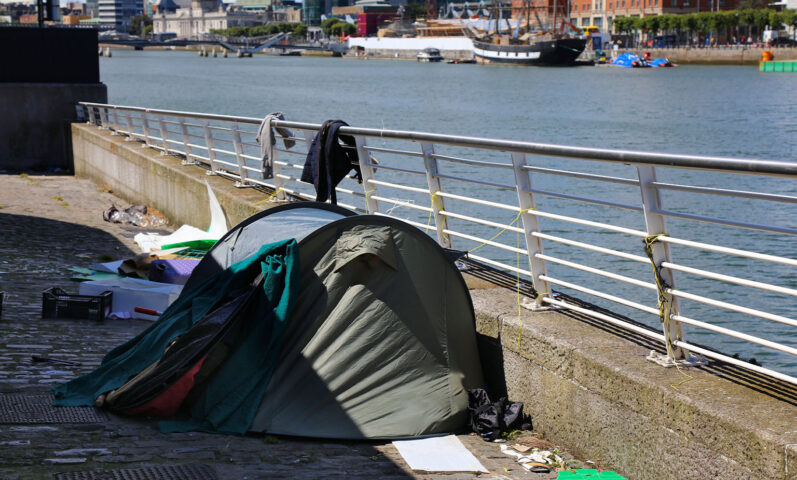
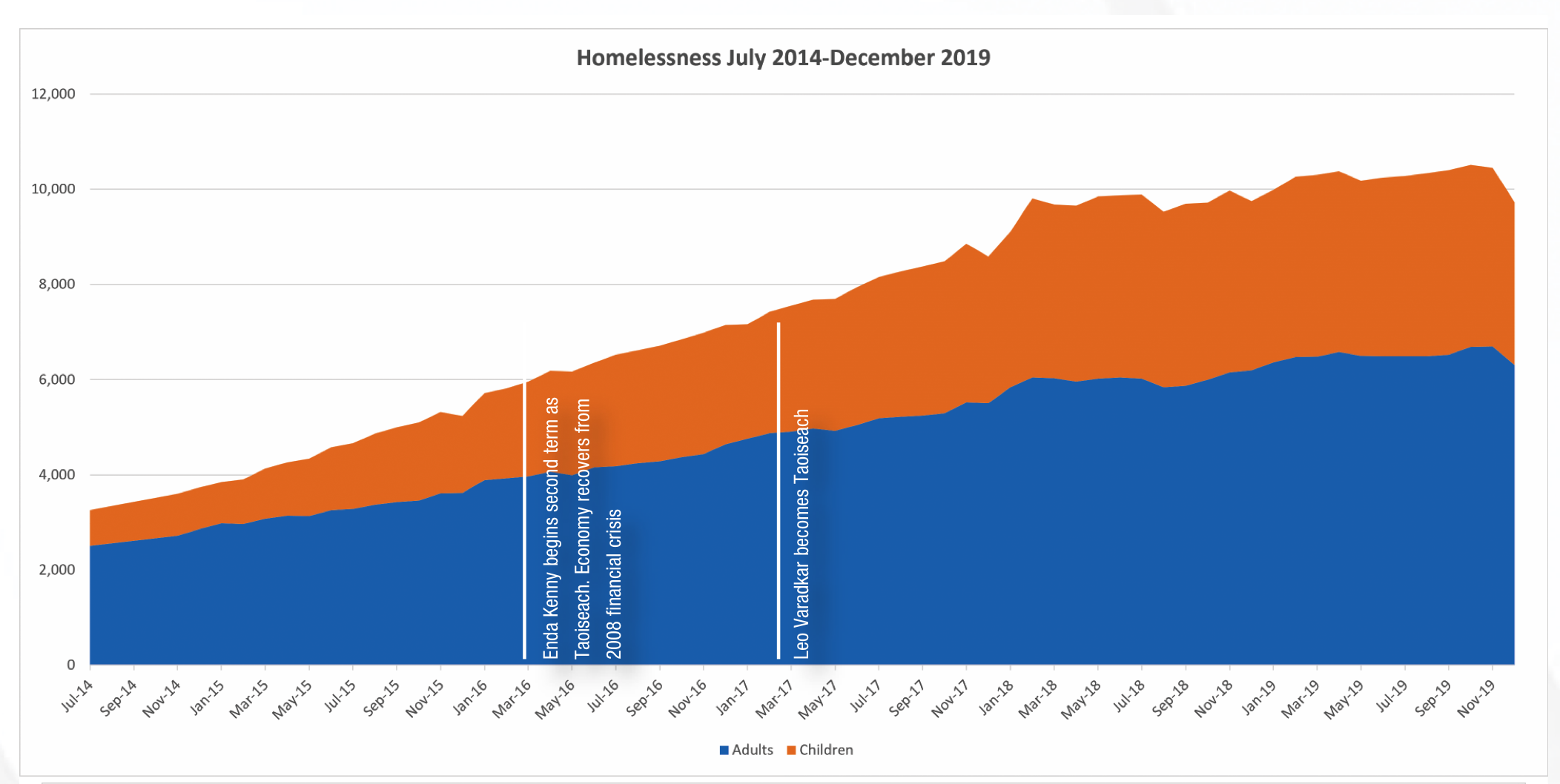
The number of homeless people in the State is five times higher than 12 years ago when data collection began, while the number of homeless children increased sevenfold in the same period.
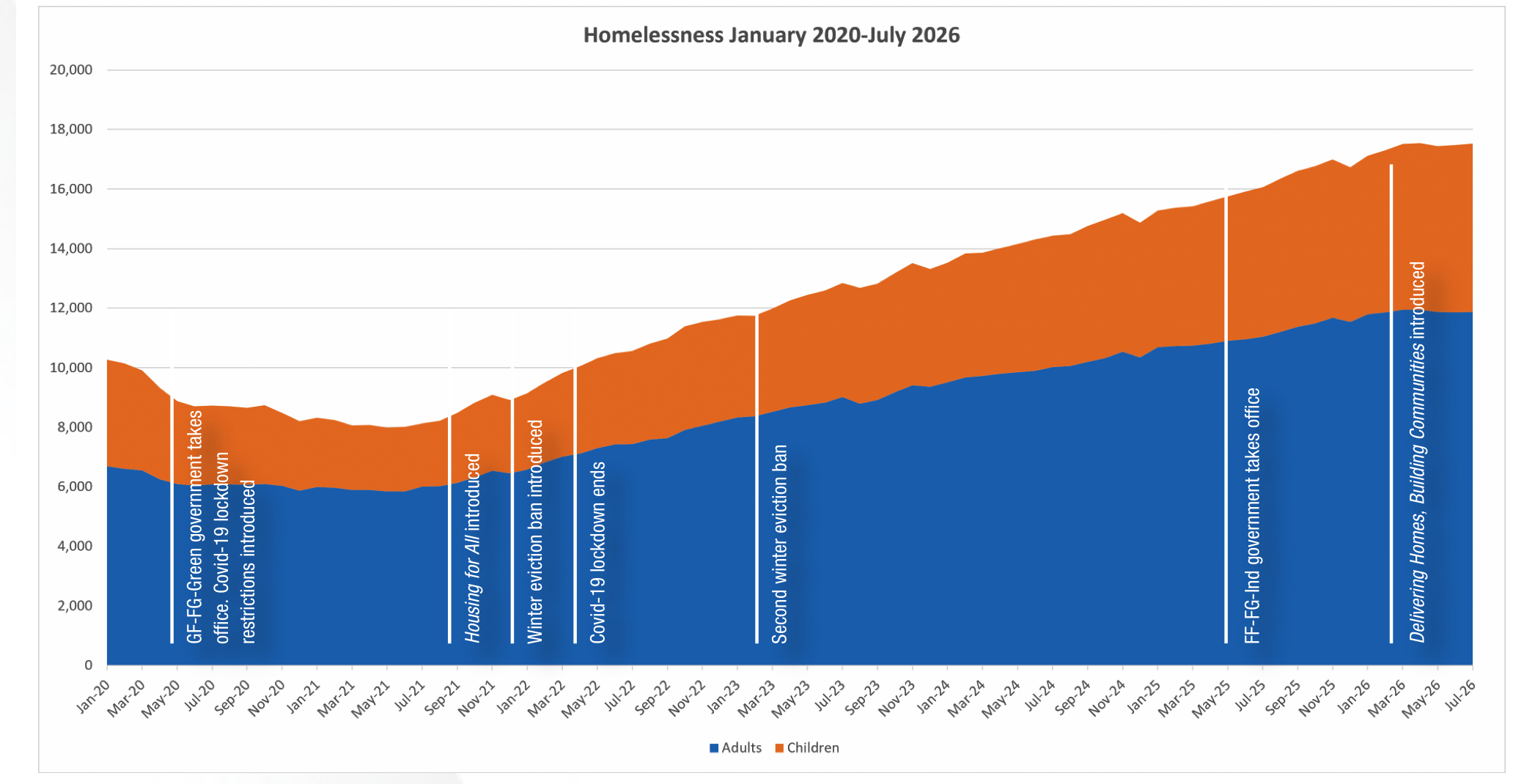
Since the formation of the new government in January 2025, an additional 2,241 people have become homeless, a 15 per cent increase in 17 months.
The Department of Housing, Local Government and Heritage’s homelessness report figures from July 2026 show that there are 17,527 people living in emergency accommodation in the State, the Government’s metric for measuring homelessness.
One reason for this considerable increase is the large number of families who have become homeless in the past year. An additional 560 families have become homeless since January 2025, a 26 per cent rise.
This increase in the number of families in emergency accommodation has had a significant effect on child homelessness with 5,659 under-18s classed as homeless. This is a 23 per cent increase compared to January 2025, with children now accounting for 32 per cent of the total homeless population.
The increase in child homelessness is more than twice as large as the rise in adult homelessness, which rose by 11 per cent in the same period.
There are now 11,868 adults living in emergency accommodation. However, the proportion of homeless people who are single adults fell by 5 per cent from January 2025.
In Q1 2026, 720 adults exited emergency accommodation. This represents a 22 per cent decrease from Q4 2024 when the figure stood at 922.
Long-term trends
The longer-term data highlights that child homelessness represents a major failure of the State.
The Department of Housing, Local Government and Heritage has released monthly homelessness data since July 2014. The July 2014 report showed that there were 749 homeless children in Ireland at the time, while in July 2026, the figure stood at 5,659.
This means that in a period where Ireland has become one of Europe’s fastest-growing economies with its modified gross national income (GNI*) climbing €350 billion, the number of homeless children has increased by 650 per cent.
This means that there are seven-and-a half-times more homeless children living in the State than there were 12 years ago.
In the same period, the adult homeless population also increased by 373 per cent, from 2,509 to 11,868, as the Government has struggled to find a solution to this crisis.
This means that since the Government began tracking homelessness in July 2014, over 14,000 people have become homeless.
Homelessness has consistently risen since 2014, with the only reprieves coming during the Covid-19 pandemic and the subsequent eviction ban, which occurred in 2020 and early 2021.
The temporary winter eviction bans from November 2022 to March 2023 also stopped figures rising for a few months, but when this was lifted, homelessness dramatically shot back up.
This correlation between evictions and homelessness, alongside a 21 per cent increase in evictions in 2025 compared to the previous year, has prompted calls for another ban from opposition parties.
Although the eviction bans provided some short-term reductions in homelessness, the figures have consistently increased for over a decade in the absence of these one-off measures, pointing to deeper structural challenges which are driving the State’s record homelessness.
Homelessness in the North
A direct comparison with homelessness figures in the North is hard to measure because the methodology for measuring homelessness is significantly different.
A person is legally defined as homeless in the North if they have nowhere suitable to live, including situations where their housing is unsafe, overcrowded, or harmful to health, are in temporary accommodation, or are staying with others because they have nowhere else to go.
By this metric, there were 64,417 homeless people living in the North in June 2026 according to figures from the Northern Ireland Assembly, a figure which dwarfs the 17,527 homeless people in the State.
However, for an effective comparison of homelessness on an all-Ireland basis, the number of people living in temporary accommodation in the North is a more accurate statistic to use.
Temporary accommodation is short-term housing provided or arranged by the Housing Executive (HE) to those who are legally recognised as homeless and includes private single lets, voluntary sector and HE hostels, and hotels.
In the North, the most recent statistics show that there were 5,633 households living in temporary accommodation in April 2026 compared to 9,968 living in homeless emergency accommodation in the State in July 2026.
Given that the population of the State is over three times larger than that of the North, these figures highlight that the homelessness crisis is not just contained within State but exists all over Ireland.
Reducing homelessness
The homelessness crisis persists in spite of the fact that, in 2025, Ireland experienced record employment levels and a growth in the GNI* of almost 5 per cent.
In an attempt to tackle the issue, Budget 2026 contained a 20 per cent increase in Department of Housing, Local Government and Heritage funding, with over €5 billion allocated to boost housing supply.
The budget also provided an increased funding allocation of €563 million, up from €328 million in 2025, to tackle homelessness through prevention initiatives, tenancy sustainment supports, and the provision of emergency accommodation.
The Government also launched its new housing action plan, Delivering Homes, Building Communities, in November 2025 to speed up the delivery of new homes to tackle homelessness.
The plan features an investment of €275 billion over 10 years, the largest ever in the history of the State, and has targets of creating 72,000 social homes and 90,000 affordable housing supports by 2030.
There is also a focus on ending child and family homelessness, with €100 million allocated to fund the second-hand acquisition of homes for families who have been in emergency accommodation the longest.
As well as this, the Government plans to work with local authorities to ensure the delivery of social housing will address the needs of those experiencing homelessness locally.
This means increasing the amount of one-bedroom and four-bedroom properties which are suitable for single adults and families will be prioritised.
Despite the Government’s commitments to tackling homelessness, the housing action plan’s mid-year report, released in July 2026, showed little tangible progress had been made.
Additionally, the housing action plan committed to a separate child and family homeless action plan, but the Government has delayed this until September 2026.
This is despite the Minister for Housing, Local Government and Heritage James Browne TD telling the Seanad in April that it would be published by Q2 2026. At the time of writing, the plan is yet to be published.
However, one initiative that has been progressed is the Dublin Rental Accommodation Scheme pilot, which was launched in June 2026.
This scheme encourages private property owners and landlords to use their homes for social housing through incentives such as long-term contracts, guaranteed monthly rent, and tax relief opportunities.
Owing to its frustration over the consistent increases in homelessness in the State, in May 2026, Sinn Féin launched its 12-point emergency homeless plan.
This outlines the steps that the party would take to end long-term homelessness by 2030 including an emergency ban on evictions and a three-year ban on rent increases
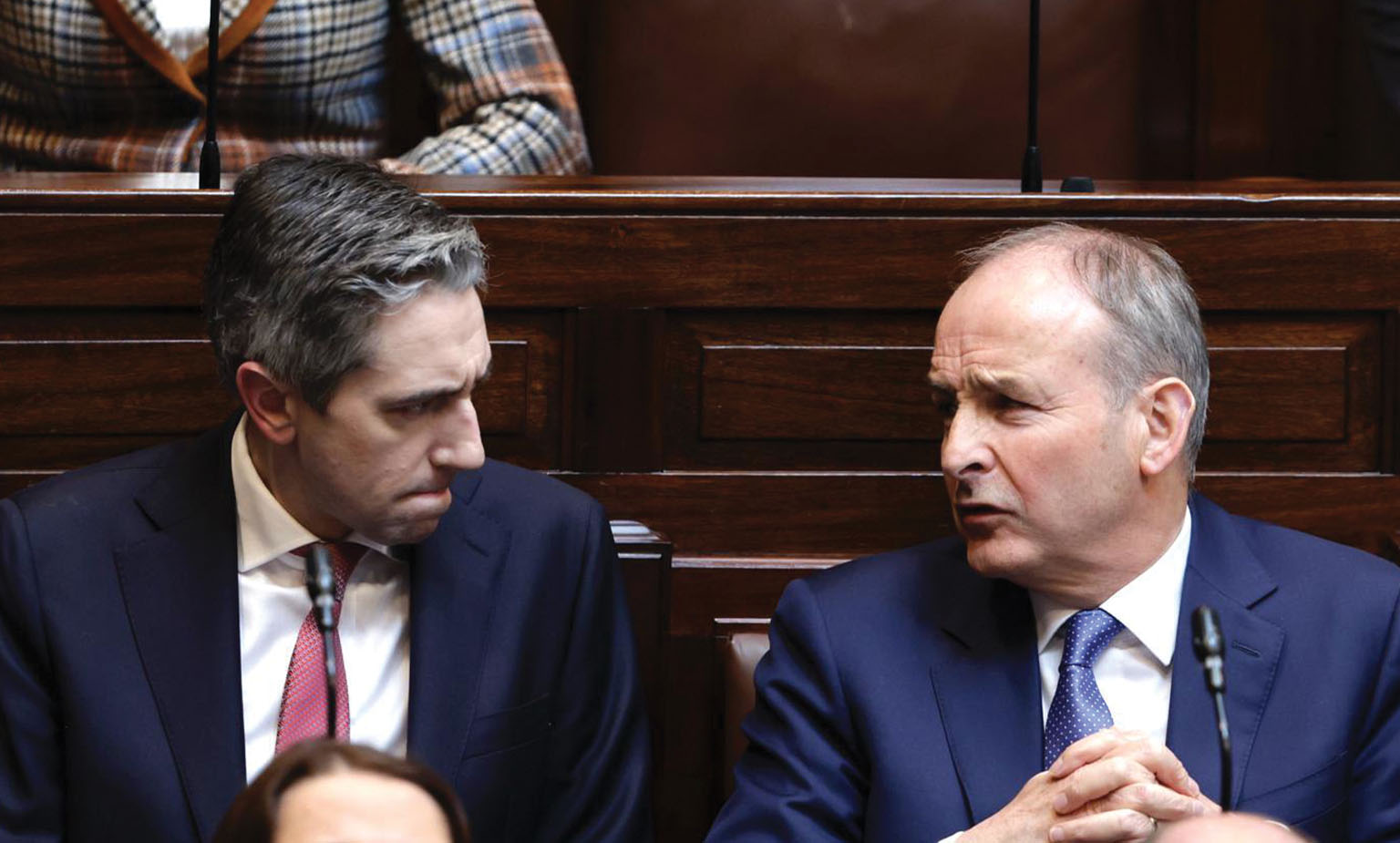
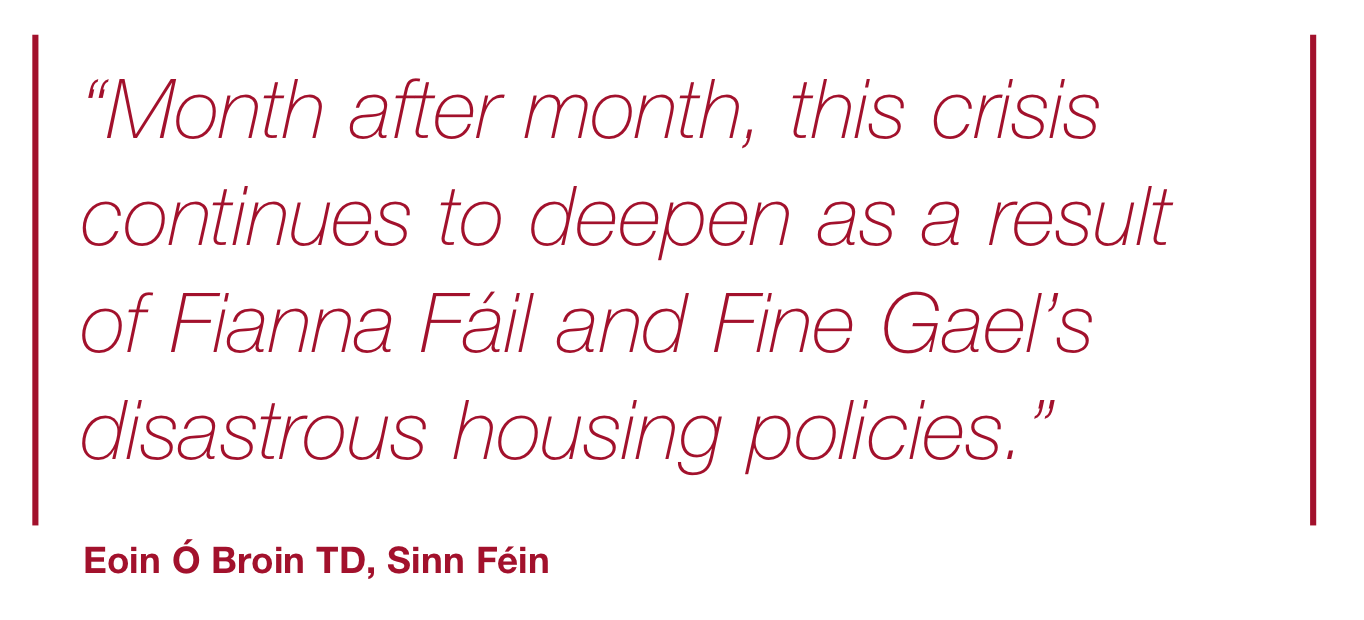
Speaking at the launch of the plan, Sinn Féin’s housing spokesperson, Eoin Ó Broin TD said: “Month after month, this crisis continues to deepen as a result of Fianna Fáil and Fine Gael’s disastrous housing policies.
“Government must urgently publish an action plan to end long-term homelessness by 2030 with clear quarterly and annual targets. This must include extending the Youth Homelessness Strategy to 2030 and including a new child homeless strategy. The Minister must then report to the Oireachtas Housing Committee quarterly to ensure the plan is fully implemented.”