
Activating supply
11th September 2026
Lessons from Ireland’s defective concrete blocks crisis
11th September 2026Increasing housing affordability

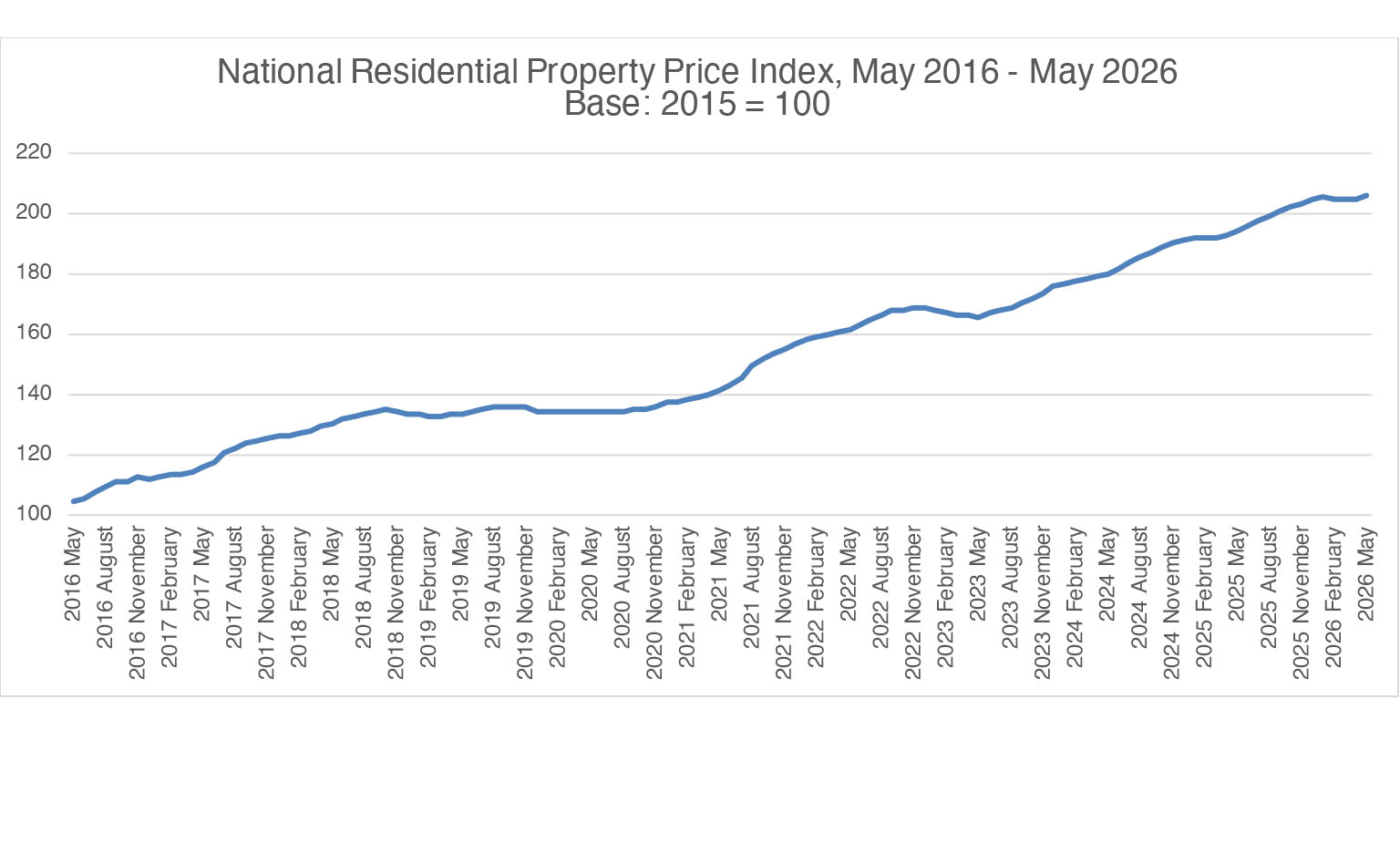
With Ireland’s average house price increasing by 103 per cent since 2015, 38 per cent above the EU average, and the median age of home buyers in 2024 being 40 according to the CSO, the State has made increasing affordability a key pillar of its housing plan.
Central to Delivering Homes, Building Communities 2025-2030, published by the Department of Housing, Local Government and Heritage in November 2025, is the commitment to deliver an average of 15,000 affordable housing supports each year through the Starter Homes Programme.
The programme will bring together a variety of existing homeownership supports under one umbrella to strengthen the focus of these initiatives while also expanding them in some cases.
The Help to Buy Scheme, which assists first-time buyers with deposit costs and can be combined with other supports, is being revised and extended to 2030.
Similarly, the Government is engaging with banks to extend the First Home Scheme until 2030.
Through this scheme the Government and participating banks provide support for up to 30 per cent of the home’s cost in return for equity in the property which can be bought back.
This scheme is being expanded to include those building their own home and tenants purchasing their home from their landlord, with a future view to include first-time buyers who want to purchase and renovate derelict or long-term vacant properties to live in.
Additionally, the Local Authority Home Loan, which provides a government-backed mortgage for eligible first-time buyers, will be reviewed to ensure that the income and house price thresholds accurately represent the market conditions.
Housing delivery
Measures are also being taken to ensure that there is suitable housing delivery to meet the demand of the affordability support schemes.
Under the Starter Home Purchase Scheme, the Government says it will provide enhanced funding to local authorities and the Land Development Agency (LDA) to deliver increased affordable housing.
To ensure that affordable housing schemes are available nationwide, local authorities that currently have no affordable purchasing project will be supported through the Affordable Housing Fund to bring forward new developments.
The increased delivery will involve an expansion of the role and remit of the LDA, which will be supported through additional AHS funding.
Another action designed to improve delivery is the development of standardised designs and specifications for homes.
By creating these consistent housing templates and encouraging the wider use of modern methods of construction, the Government aims to lower building costs, increase the scale of construction, and reduce delivery times.
Rental affordability
The Starter Home Programme also intends to provide greater affordability for renters by supporting the wider availability of cost rental homes through increased funding.
Introduced in 2021, these properties offer long-term rents which are at least 25 per cent below market rate to people who earn too much for social housing but struggle with high private rents.
The delivery of new cost rental homes is also exempt from corporation tax, making these projects more viable and ensuring the 25 per cent discount can be maintained.
There will also be a review of cost rental delivery streams, with plans to create a single funding model across local authorities, approved housing bodies, private developers, and the LDA.
The strategy also commits to supporting local authorities to develop more cost rental homes by ensuring that borrowing limits are not a barrier to their delivery.
Additional support for renters comes through the extension of the Rent Tax Credit to the end of 2028, which reduces an individual’s income tax payment by 20 per cent of their annual rent, up to €1,000. This amount will be progressively increased through the period of the strategy.
The strategy also commits to strengthening the Residential Tenancies Board (RTB), with a particular focus on reducing dispute resolution times through a new system.
To support this, the RTB’s budget for 2026 was raised from €14.5 million in 2025 to €22.8 million, a 57 per cent increase.
As committed to in the Programme for Government, a National Rent Price Register will also be published, providing greater transparency by allowing tenants and landlords to view price information in specific areas.
To ensure compliance with legal standards, the Government aims to support local authorities to meet their annual target of inspecting 25 per cent of private rented tenancies in their area.
Increased student accommodation is highlighted as a tool to reduce pressure on the rental market and prevent housing costs becoming a barrier to accessing higher education.
The National Student Accommodation Strategy 2026-2035 aims to increase the amount of new accommodation through supply and viability measures and provide targeted affordability supports for priority groups.
New rental rules
The Government commits to stronger protections for tenants, focusing on legislation to increase the security of tenure.
These new rules, introduced in March 2026, guarantee renters a minimum six-year term and reduce the grounds for terminating a tenancy to; if a tenant breaches their obligations, the property is no longer suitable, the landlord must sell to avoid financial hardship, or if they need to live in the property.
From the same period, rent increases for new and existing tenancies are capped in line with the rate of general inflation or 2 per cent a year, whichever is lower.
However, for private tenancies created from this date, landlords can reset the rent at market rate if the last tenancy was not ended by a no-fault eviction.
This part of the bill was controversial and received significant criticism from opposition parties, who warned it would cause rent increases, which may have already occurred.
A report from Daft.ie found that rents rose by as much between December 2025 and March 2026, 4.4 per cent, as they did over the whole of 2025, which is the largest quarterly gain on record back to 2002.
Additionally, data from the RTB shows that eviction notices issued by landlords rose by 50 per cent in the first quarter of 2026 compared to the previous year, from 4.693 to 7,062.
Minister for Housing, Local Government and Heritage, James Browne TD says: “These supports will allow thousands of people to realise their ambition of homeownership and ensure that those who wish to rent can do so at affordable prices.”
Sinn Féin housing spokesperson Eoin Ó Broin TD says: “Neither the cost rental nor the affordable purchase targets are anywhere close to what is needed.
“Government should be funding and delivering an average of 10,000 affordable homes every year, split evenly between cost rental and genuinely affordable purchase. Their failure to do this is actively contributing to the ever-deepening affordable housing crisis.”