
Increasing housing affordability
11th September 2026
Building the future of cost rental
11th September 2026Lessons from Ireland’s defective concrete blocks crisis
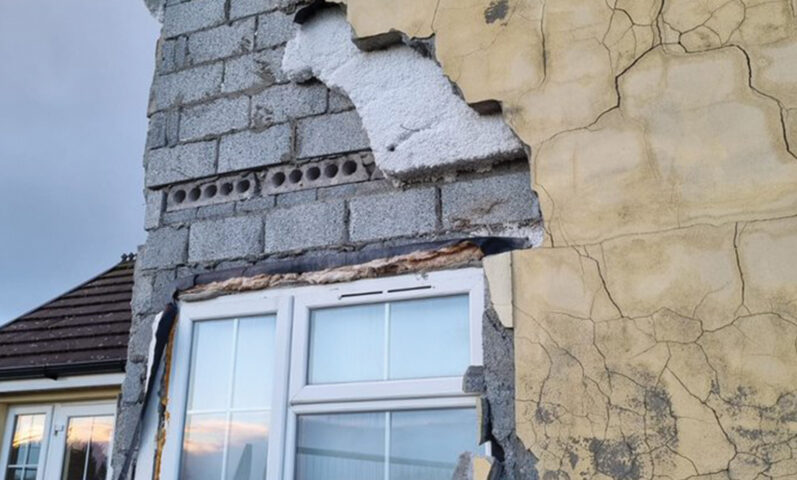
Credit: X/Mica Redress.
Charles Ward TD reflects on how failures in regulation and oversight became a national housing and social challenge, and why restoring homes must go hand in hand with rebuilding communities.
Every housing system depends on trust. People trust that the home they buy is safe and that the systems designed to protect them will respond when things go wrong. For thousands of families affected by defective concrete blocks, that trust was broken.
I never set out to enter politics. When I found myself on the receiving end of system failure, I had a choice: remain on the sidelines or step forward and fight. Before becoming a TD, I had a fulfilling career as a healthcare professional. Politics was never my plan, but this crisis changed my path from seeking answers to fighting for them.
This was never simply a problem with defective concrete. It became a wider failure of regulation, enforcement, market surveillance, and consumer protection.
During the construction boom, regulatory failures allowed defective products into homes. Families bought in good faith, trusting the standards, certifications, and oversight systems designed to protect them. They were not responsible for that failure.
It is estimated that at least 30,000 homes in Donegal are affected. Behind that figure are families who worked, saved, and borrowed for a home they believed was safe. They did not choose the materials, set the standards, or create the failure they now carry.
Initially identified as a mica problem following a desktop study, the crisis shaped the State’s response for years. Homeowners campaigned for further research, revealing a more complex picture involving iron sulphide attack and other forms of concrete deterioration.
For affected families, terminology mattered because it shaped the response. Homeowners fought for the science to reflect the damage occurring in their homes. When understanding changes, the response must change with it.
IS 465 is not simply a technical standard. For homeowners, it can determine whether their homes are recognised and their futures restored. I know this crisis personally because I became one of those homeowners.
I was given an engineering assessment based on the original understanding of the problem. I believe it did not reflect the true damage mechanism affecting my home, leaving me trapped in limbo.
I know what it feels like to spend winters in an affected home, unsure of what the future holds. Since entering public life, I have heard the same fears from families and elderly homeowners across Donegal still waiting for resolution.
Ulster University research has exposed the human cost of this crisis, highlighting severe mental health impacts among affected homeowners. This is not just a housing failure; it is a community crisis.
The campaign for justice was built by homeowners themselves; ordinary people who became activists because they had no choice. They organised, protested, and demanded answers.
They were not seeking compensation or upgrades. They were seeking the restoration of homes they bought in good faith. Instead, many were left with a grant scheme of last resort, financial gaps, and years of delay.
A capped scheme cannot stand still while costs rise. Every delay widens the gap between State funding and the true cost of restoring homes. The exclusion of foundations, inadequate upfront funding, delays in delivery, and the failure to enable side-by-side rebuilding where possible have prolonged a crisis families did not create.
For homeowners downgraded during the transition to the revised scheme, the uncertainty has been profound. Assessments previously carried out by registered engineers were re-evaluated through desk-based reviews, with some homeowners assigned lesser remediation options that did not address the full extent of damage they believe exists in their homes.
Some have waited almost five years for appeals to be resolved while their homes continue to deteriorate and costs rise.
The impact extends far beyond individual homes. Across Donegal, the crisis has affected community buildings, rentals, social housing, mortgages, insurance, conveyancing, and property values.
With similar concerns emerging elsewhere, this is now a national challenge for housing standards, consumer protection, and confidence in the construction sector.
When domestic systems failed to provide answers, homeowners sought European scrutiny. Their complaint to the European Commission and the European Parliament’s fact-finding mission to Donegal highlighted concerns around construction products, market surveillance, and consumer protection; a situation that should concern every policymaker.
The Coleman Legal challenge represents another step in the pursuit of justice, seeking accountability for failures in defective construction products, certification, and oversight.
100% Redress
The principle behind 100% Redress is simple. Homeowners should not bear the cost of failures in systems designed to protect them. They seek restoration, not compensation.
The political consequences of this crisis cannot be ignored. Years of delay and rejected proposals eroded trust in the political system and led to the creation of the 100% Redress Party.
Since entering the Dáil, we have continued the fight through relentless advocacy, holding government to account, and standing alongside affected families.
Ireland needs more homes. But housing policy must also ensure people can trust the homes they buy.
The defective concrete crisis must be a turning point; one that strengthens regulation, restores confidence, and ensures families are never again left carrying the cost of systemic failure.
The homes restored must be homes built to last, providing a permanent solution for families and ensuring public funds deliver a lasting outcome.
The task is clear and it must begin in earnest: restore homes, rebuild trust, and rebuild our communities.
Charles Ward is a 100% Redress TD who represents Donegal in Dáil Éireann.