How The Housing Agency supports learning in the housing sector
11th September 2026
Fingal unlocking land, delivering homes, and building communities
14th September 2026Social housing reforms may increase housing insecurity

Reforms to social housing enacted in July 2026 may increase housing insecurity with pronounced impacts for the most vulnerable in society, human rights experts have warned.
The Housing and Residential Tenancies (Miscellaneous Provisions) Act 2026 stipulates that applicants must be lawfully resident and habitually resident in the State to receive social housing support. This is aimed at ensuring the State takes a consistent approach to the provision of social entitlements.
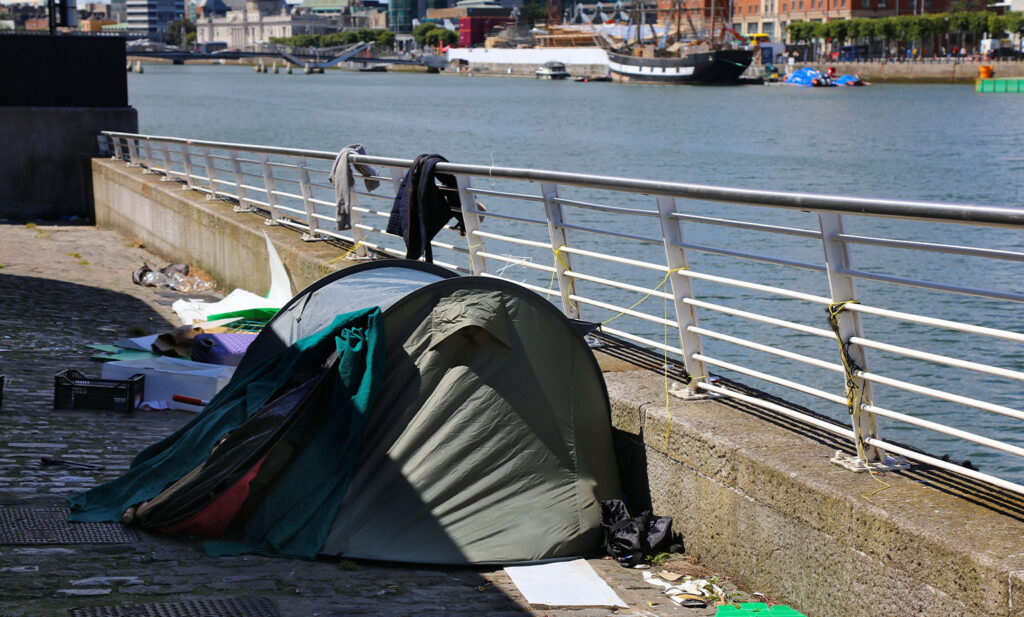
During a Dáil Éireann debate in July 2026, Minister for Housing, Local Government and Heritage James Browne TD said a “safety net service” has been introduced “to guard against an increase in rough sleeping” arising from this. This is to enable local authorities to provide emergency accommodation to those deemed ineligible for homeless supports and services.
The service is confined to circumstances where a local authority has determined that someone is ineligible for homeless supports due to their residency status. It is to be provided by local authorities and operated on “a night-to-night” basis.
“This is to allow local authorities to reassess the circumstances each day to determine that the safety net should still be provided,” said Minister Browne.
Local authorities’ grounds to withdraw the provision of homeless accommodation are to be expanded to include “the refusal of a reasonable offer of social housing”. The expansion also includes circumstances where someone engages in behaviour causing or intended to cause serious harm or death to another user or staff member of the emergency accommodation. Should a local authority withdraw the provision of homeless accommodation, this may be appealed.
The Act provides for additional eligibility criteria for access to certain services provided to homeless people and the withdrawal of these services in certain cases. It also provides for an appeal in respect of such withdrawal.
Additionally, it makes provision in relation to the conduct of mediations, adjudications and tribunal hearings, and the determination of disputes by the Residential Tenancies Board (RTB) along with the enforcement of such determinations.
The legislation increases the penalties for summary offences and provides for the service of fixed payment notices in respect of certain offences under the Residential Tenancies Act 2004. The 2026 Act also provides that the 2004 Act shall not apply to certain dwellings.
It introduces an obligation on local authorities to have regard to the best interests of children when making decisions on the available accommodation to be provided to a family with children assessed as homeless.
Households may appeal a housing authority’s decision that they are not qualified, no longer qualified, or a particular form of social housing support is the appropriate form of support.
Residency rules
The new requirement for social housing applicants to be lawfully resident and habitually resident in the State has been criticised by human rights and housing experts. Previously, under the Housing (Miscellaneous Provisions) Act 2009, one member of a household needed to prove habitual residency. Under the new Act, all members of the household – excluding children – will need to prove this.
Koldo Casla, UN special rapporteur on adequate housing, wrote to the Government in August 2026 to raise human rights and equality concerns arising from the legislation. Casla raised concerns that the Act could lead to entire households being denied social housing support because of one household member’s residency status.
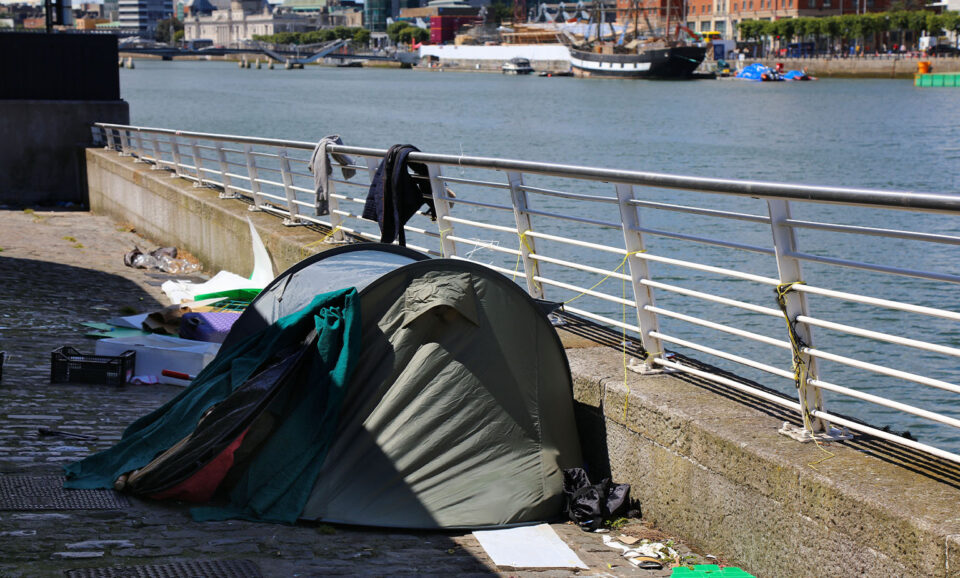
He said it this could have significant consequences for trafficking victims, people who have experienced domestic and gender-based violence, migrant communities, and other vulnerable groups. The special rapporteur on housing also said the Act could lead to an increase in rough sleeping.
Casla stated that nationality and migration status are not sufficient grounds on which to exclude people from their human rights. He said any differential treatment must be justified as necessary, reasonable, and proportionate.
The housing expert asserted that any laws or policies that reduce the protection of the right to housing should involve meaningful engagement with people affected, must be non-discriminatory, and must ensure the rights of the most disadvantaged are not disproportionately affected.
Casla called on the Government to explain how the new measures comply with the principles of legality, reasonableness, necessity, proportionality, transparency, and impact assessment including their impact on particularly vulnerable groups.
The Irish Human Rights Equality Commisssion (IHREC) says it “raised concerns about the legislation directly with the Minister for Housing, Local Government and Heritage in correspondence” in June and July 2026.
“In addition, as the legislation passed, IHREC raised concerns about the manner in which this legislation was rushed through without adequate scrutiny, meaningful consultation, or a proper human rights impact assessment,” the IHREC says.
Chief Commissioner Liam Herrick says: “We now have an independent UN human rights expert raising significant concerns about the potential impact of the legislation on some of the people who are most vulnerable to homelessness and housing insecurity.
“This legislation must be judged not simply on whether it is legally permissible or whether it provides clarity to local authorities; but on its real-world impact on people’s ability to access housing and avoid homelessness.”
During a Dáil Éireann debate in July 2026, Minister Browne said: “These legislative reforms are building on existing policy and procedures which, in the first instance, define social housing as a long-term housing support and, therefore, successful applicants must be in a position to demonstrate that they have a long-term entitlement to reside in the State, that is, that their permission to reside here is not temporary or short-term.”