
Grant announces €8 million investment
14th September 2026
Environmental, Social and Governance in housing
14th September 2026Eoin Ó Broin TD: ‘Homelessness is an eminently solvable problem’
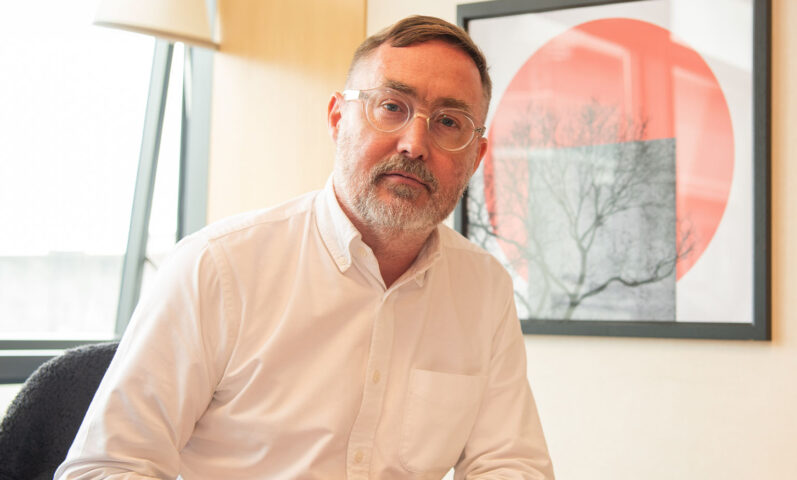
Sinn Féin housing spokesperson Eoin Ó Broin TD sits down with Ciaran Brennan to discuss Sinn Féin’s alternative homelessness strategy, how he believes the private rental sector should be structured, and alternatives to the Government’s housing policies.
Eoin Ó Broin TD is speaking following the publication of Sinn Féin’s alternative homelessness strategy, An Emergency Response To The Homeless Crisis, in May 2026. It calls for a five-year plan to end long-term homelessness, and an update and extension of the Youth Homelessness Strategy to 2030 along with the incorporation of a child homeless strategy.
Discussing the plan’s measures, Ó Broin says: “They are all eminently sensible, they are doable, and even though homelessness is at a level we have never seen before, it is an eminently solvable problem within a five-year period.”
On homelessness prevention, it calls for a row back on cuts to the Tenant-In Situ and Social Housing Acquisition schemes, an emergency ban on evictions, and a three-year ban on rent increases. It also calls for a full month’s rent to be returned to renters.
Sinn Féin has long been promising to put a full month’s rent “back into renters’ pockets”. Ó Broin notes the challenge of delivering this, saying: “Renters are paying different levels of rent in different locations and we need to have the scheme very efficient.”
He explains that there would be both a minimum and maximum of how much renters would get. When asked if this meant some renters would not get the full amount of rent, he says it would be capped at €2,000 per person. However, he contends that these are rents for “luxury properties”, adding that the “overwhelming majority of renters”, will receive the full month’s rent.
The plan also calls for the number of Housing First tenancies to be doubled each year; and delivery of a multiannual stream of small infill social housing schemes. This is aimed at initially ending homelessness for over-55s before being used to enable age-friendly rightsizing. This is intended to free up larger family homes to exit families with children from emergency accommodation.
On increasing supply, the plan suggests increasing funding and cutting red tape in the delivery of homes by local authorities and AHBs. It also sets an aim to double allocation from new and existing social housing stock for people in or at risk of homelessness.
Private rental sector
Ó Broin asserts that the private rental sector has an important role to play, but says: “As the private rental sector increases in size, housing insecurity, housing inequality, and housing unaffordability rises.”
He says that the goal should be to see the private rental sector as a percentage of overall housing stock decline from its current level of approximately 20 per cent to around 10 per cent. The housing spokesperson asserts that the delivery of social, affordable, and private-for-purchase homes should be prioritised.
“I have no objection to landlords making a reasonable return for providing a good quality service,” says Ó Broin. “But the idea, which is government policy, that a dramatic increase in the supply of expensive, high-density private rental accommodation is the solution, completely misunderstands the problem.”
He asserts that the Government’s handling of affordable housing delivery is its “single biggest failure”. As a consequence, he says there is a growing number of working people on average and above average incomes “who cannot rent or buy”.
The Sinn Féin TD asserts that the Government’s approach is “further punishing renters with increased rents, increased insecurity”, and fails to provide a pathway to the housing type to meet their needs.
“There is an awful lot of rubbish talked about planning in our political and public discourse.The overwhelming majority of our planning system actually works very well.”
Planning
When discussing overhauls that should be made to the State’s planning system, Ó Broin says: “There is an awful lot of rubbish talked about planning in our political and public discourse. The overwhelming majority of our planning system actually works very well.”
However, he adds: “There are certain types of planning applications where there are real challenges.”
Ó Broin says statutory timeliness must be introduced at all sections of the planning process for all developments, and asserts that this would require an additional three to four hundred staff in planning authorities.
The Sinn Féin TD says only a small number of projects are subject to judicial review, but the they “tend to be very significant ones”. Asserting that judicial reviews take too long, he suggests this is because there are only three judges presiding over planning environmental cases. Ó Broin says there should be six “at a minimum”.
“Planning decisions have to be done in a timely manner, so they are good quality decisions that make the social, economic, and environmental needs of the State,” he adds.
“Even if we get an increase in homes, they are not going to be the right kind of homes to meet the right kind of need, at the right price, in the right place.”
Government
Ó Broin describes himself as “unusual”, as he has presided over the same portfolio for the last decade. In that time, there has been four different housing ministers: Simon Coveney, Eoghan Murphy, Darragh O’Brien TD, and current minister James Browne TD.
“There is a frustration because each minister repeats many of the mistakes of their predecessors,” says Ó Broin.
Under Browne, the Department of Housing published the Government’s latest housing plan, Delivering Homes, Building Communities, in November 2025. Ó Broin says it is “exactly the same as Darragh O’Brien’s previous housing plan”, Housing For All, in the areas of social and affordable housing provision, vacancy and dereliction, and homelessness.
However, the Sinn Féin TD identifies three new policies introduced by Browne: a “reduction in the design standards for new apartments”, a €640 million VAT reduction over two years for the development of new apartments, and “the removal of rent regulation between tenancies”.
He says these are designed to attract large-scale international institutional investment into the market to enable the delivery of “high-density, high-cost, high-rise apartment developments”.
Ó Broin argues that this will likely only increase some apartment supply in Dublin and Cork, and it will have no impact anywhere else “because big institutional investors are not interested” in anywhere else. He also claims it will deliver “smaller, darker, much, much more expensive apartments”, which will not put downward pressure on rental prices.
He asserts that it will not achieve the Government’s goal of delivering 300,000 homes by 2030, adding: “Even if we get an increase in homes, they are not going to be the right kind of homes to meet the right kind of need, at the right price, in the right place.”

‘Hurling from the ditch’
When asked about the common criticism of Sinn Féin as being a party that ‘hurls from the ditch’, Ó Broin disputes it: “The accusation of hurling from the ditch is you just criticise and you have no alternatives.
“I spend more of my time talking about the alternatives than I do the criticisms,” he says. “I am repeatedly on record saying we will work with them on things if they want to bring forward ideas.”
Demonstrating this, Ó Broin claims he has offered to work with the Government to improve the Cost Rental Scheme, but says that Browne “just is not interested in the conversation”. He says many people who should be eligible for this scheme are excluded because they do not earn enough, yet they earn too much for social housing.
The Sinn Féin TD also criticises the Government’s engagement with The Housing Commission which was established under the 2020 Programme for Government to examine housing provision issues. It published its report in May 2024.
Ó Broin claims that Darragh O’Brien “refused to meet” the Commission when he was minister. He continues: “The current minister has met them once and none of the proposals in this report are contained in the Minister’s housing plan.”
One of the key recommendations in the report was the establishment of a housing delivery oversight executive, an entity with power to address functional failures and implement reforms in housing. Sinn Féin includes the establishment of the entity in its housing plan.
Ó Broin says: “No absence of alternatives, no lack of different ways to tackle this crisis, the central problem is political will. The Government has ignored their own commission, they are ignoring our alternatives.
“We are in for senior hurling, but we are on the pitch.”